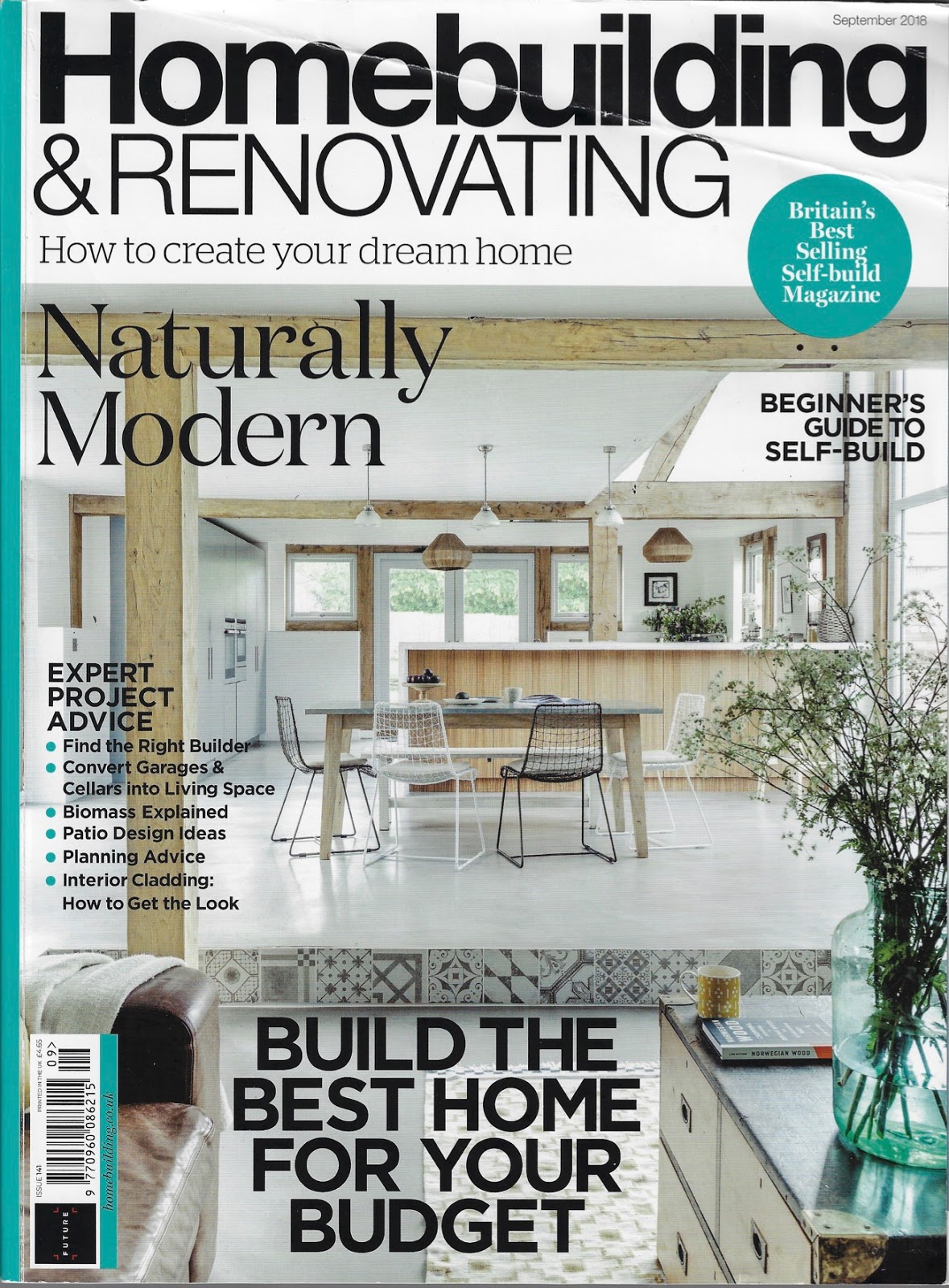
DHV Architects in Bristol are featured in Homebuilding and Renovating Magazine.
Tuesday, 16 October 2018
Monday, 30 April 2018
A radical bungalow remodel
In 2016 we were appointed to redesign a small bungalow in North Somerset. The clients had recently moved back to the UK after spending a decade in Australia, where they had become accustomed to open plan houses with a strong connection to the outdoors. Not keen on going back to a home of conventional cellular plan - and given the lack of alternatives on the market - they decided to undertake a radical renovation project to create their dream house.
They purchased a small, outdated bungalow in the pretty village of Wrington, approximately 30min. drive from Bristol. The original property comprised a small kitchen with a separate dining room, a living room, two bedrooms and a conservatory, measuring 83sqm in total. Restricted headroom in the roof space precluded a straightforward loft conversion.
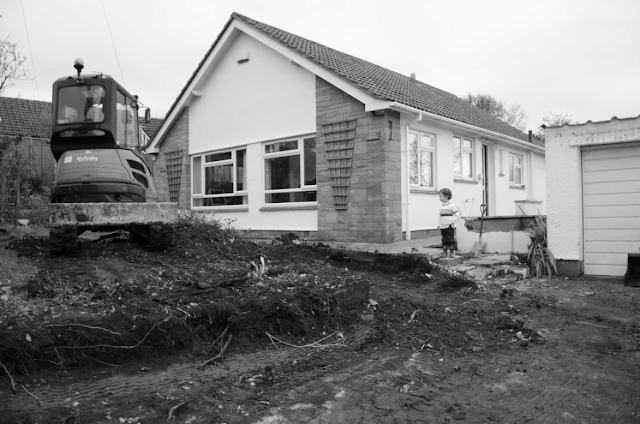
The client's initial brief included an attached garage, a separate office and ground floor bedroom and a large open plan kitchen / dining / living area with direct access to the rear garden. Upstairs, the clients planned two bedrooms, en-suite and bathroom. We drew up several layout options and prepared 3d visuals for discussion; any changes to the floor plan should be considered in conjunction with the resulting massing, which is why we always include three dimensional studies at this stage of the design process. Although not located in a conservation area, the alterations had to be designed carefully in order to fit the local context of low-rise detached dwellings and appear proportionate to the original bungalow.
![]() |
| existing (left) and proposed (right) ground floor plans |
In order to preserve the valuable rear garden it was decided to extend the ground floor to the side of the bungalow, following demolition of the existing garage. The new service areas (ground floor bathroom and utility room) would be relocated to the current kitchen, taking advantage of the existing drainage connections; the dining room would be retained as a separate space and turned into a study. The rear portion of the bungalow would be opened up to create a generous open plan living area facing the rear garden. Upstairs, the roof would be raised by 800mm to create enough headroom for the bedrooms and bathroom, with a centrally located staircase to minimise the circulation areas and optimise the layout.
The side extension is designed as a gabled volume that reflects the existing bungalow; the massing is articulated in two separate elements, thus reducing the visual impact of the extension. The new extension is simple and contemporary, with generous windows and clean finishes. The existing facades have been modernised to tie into the new extension visually, forming a comprehensive unit: the walls have been rendered, new aluminium windows installed throughout and the double roman tiles replaced with artificial slates.
The planning process was smooth and consent was duly granted in December 2016. Building work started in June 2017 and was completed by Christmas. The house is now totally unrecognisable from its humble beginnings as a modest bungalow. The footprint has been increased to 144sqm on the ground floor, plus an additional 43sqm at first floor; the 187sqm total floor area represents an increase of 225% from the original 87sqm. Despite the large size increase, the house feels feels perfectly at home in its settings and the clients are delighted with the end result.
Tuesday, 12 December 2017
DHV Architects appointed for Elizabethan House Museum in Plymouth
DHV Architects have been appointed as lead consultants for the regeneration of the late 16th Century Elizabethan House Museum for Plymouth City Council.
The Elizabethan House is a Grade II* listed quay-side merchant's house in the Barbican area of Plymouth' beautiful historic old town. The museum is the most complete and unaltered example of a jettied merchant's house in Plymouth.

We are leading a team of specialist consultants to help deliver an imaginative interpretation strategy alongside carefully considered repair and conservation work. The project is being delivered in collaboration with James Mackintosh Architects as part of a growing strategic partnership between the practices.
The Museum is due to re-open in 2020 as a leading component of the Plymouth Mayflower 400 celebrations.
The Elizabethan House is a Grade II* listed quay-side merchant's house in the Barbican area of Plymouth' beautiful historic old town. The museum is the most complete and unaltered example of a jettied merchant's house in Plymouth.

We are leading a team of specialist consultants to help deliver an imaginative interpretation strategy alongside carefully considered repair and conservation work. The project is being delivered in collaboration with James Mackintosh Architects as part of a growing strategic partnership between the practices.
The Museum is due to re-open in 2020 as a leading component of the Plymouth Mayflower 400 celebrations.
Monday, 13 November 2017
Extension with L shaped Open Plan Family Space in Redland, Bristol by DHV Architects
A 1930s house in Redland, Bristol has been extended with a half width extension with corner glazing to create a generous kitchen / diner / living space with ample space for the owner's family.
![]() |
| Extension to 1930s house in Redland, Bristol by DHV Architects 01 |
![]() |
| Extension to 1930s house in Redland, Bristol by DHV Architects 02 |
![]() |
| Extension to 1930s house in Redland, Bristol by DHV Architects 03 |
![]() |
| Extension to 1930s house in Redland, Bristol by DHV Architects 04 |
![]() |
| Extension to 1930s house in Redland, Bristol by DHV Architects 05 |
Friday, 1 September 2017
Planning granted for new build house
DHV
architects have received planning consent for a new build infill house
in Bedminster, South Bristol. Set on a trapezoidal plot measuring a mere
73sqm the building offers an imaginative solution to a constrained
urban site. The 3bed house spans over three levels achieving a total floor
area of 92sqm - as required by the Technical housing standards
(nationally described space standard).
The massing of the house reflects the traditional Victorian terraces; the roof ridge and eaves are lower than the adjacent property so that the new building appears to step down the hill, continuing the pattern of the existing terrace.
The street facing elevation is contextual yet contemporary with vertical-emphasis windows and offset fenestration pattern. A timber-clad porch provides vertical storage for two bicycles and helps articulate the facade. The scheme is unashamedly modern and sets a model for contemporary infill housing within the historic grain of the city.
The massing of the house reflects the traditional Victorian terraces; the roof ridge and eaves are lower than the adjacent property so that the new building appears to step down the hill, continuing the pattern of the existing terrace.The street facing elevation is contextual yet contemporary with vertical-emphasis windows and offset fenestration pattern. A timber-clad porch provides vertical storage for two bicycles and helps articulate the facade. The scheme is unashamedly modern and sets a model for contemporary infill housing within the historic grain of the city.
Tuesday, 4 July 2017
Training Opportunities in Stone Conservation at Llandaff Cathedral, Cardiff
As part of the forthcoming Clerestory Shaft Repair Project at Llandaff Cathedral we
are offering five work placements to trainees to work alongside the stonemasons and conservators who will be working on the cathedral. Each placement will be of 3-4 week’s duration. Most work will be inside the cathedral on high-level stonework and windows. There will also be an opportunity to visit the mason’s workshops in Carmarthen.
You need not have direct experience of stone masonry or conservation, but you must be either considering a career in building conservation in Wales, or looking to improve your existing construction skills. You will need to be fit, reliable and able to work at height on a scaffold. A stipend of £56 per day will be paid to trainees to cover travel and accommodation expenses.
Contact enquiries@olivercoe.com for more information
are offering five work placements to trainees to work alongside the stonemasons and conservators who will be working on the cathedral. Each placement will be of 3-4 week’s duration. Most work will be inside the cathedral on high-level stonework and windows. There will also be an opportunity to visit the mason’s workshops in Carmarthen.
You need not have direct experience of stone masonry or conservation, but you must be either considering a career in building conservation in Wales, or looking to improve your existing construction skills. You will need to be fit, reliable and able to work at height on a scaffold. A stipend of £56 per day will be paid to trainees to cover travel and accommodation expenses.
Contact enquiries@olivercoe.com for more information
Friday, 19 May 2017
Extension with a view in Redland, Bristol
The new extension by DHV Architects creates a new generous family space for cooking, eating and relaxing. The corner glazing allows for far reaching views onto Redland Green and towards the city. The muted colour scheme creates a calm and tranquil atmosphere.
Subscribe to:
Posts (Atom)


